LGBTQ+

LGBTQ+ athletes face stigmas and discrimination that inhibit their access to competition. In order for all girls and women to participate in and gain the benefits of sports, schools and sport governing bodies should provide inclusive environments that offer safe and equitable opportunities to participate.

25 Organizations Join WSF Letter to NCAA Regarding Transgender Athlete Participation Policy

On January 19, 2022 the NCAA announced a change to their Transgender Athlete Participation Policy, that had been in place since 2011. Subsequently, on January 27, 2022, the NCAA released additional information regarding the implementation of this new policy.

The WSF sent the below letter, joined by 25 organizations, to the NCAA Committee on Competitive Safeguards and Medical Aspects of Sport and the NCAA Office of Inclusion. This letter voices concern about the process under which this new policy was reviewed and implemented and the process that transgender athletes must now follow in order to compete. It also outlines minimum standards of inclusion and ways that the NCAA should approach changes to the Transgender Athlete Inclusion Policy that focus on the impact on transgender athletes.

WSF appreciates the organizations that signed on and their commitment to speaking out about this important issue. We are committed to inclusion and access for all student-athletes.


February 15, 2022

NCAA Committee on Competitive Safeguards and Medical Aspects of Sport c/o Dr. Brian Hainline
NCAA Office of Inclusion c/o Dr. Amy Wilson
cc: Dr. Mark Emmert, Carrie Van Sensus, Anne Rohlman

Sent via email

Dear NCAA Committee on Competitive Safeguards and Medical Aspects of Sport and Office of Inclusion:

We the undersigned are writing today to express our concerns about the process and content of the newly adopted NCAA Transgender Athlete Participation Policy.

The policy adopted and implemented on January 19, 2022 is unprecedented in both process and timeline. To many, this policy change appears to be in direct reaction to mounting public pressure around the success of one particular NCAA athlete (who is participating and succeeding under NCAA standards). However, this is an association-wide policy and there are likely other athletes in several sports who have now had their eligibility requirements changed mid-year and perhaps even mid-season.

Instead of a rushed implementation, an updated policy should have been adopted based on the input of various stakeholders after the conclusion of a thoughtful process and review that was already underway. Further, the timing and effective date of the policy change should have considered the impact on all current and future NCAA student-athletes. As such, we would like to draw your attention to our immediate concerns and questions.

  • This policy defers criteria for participation to the sport National Governing Bodies (NGB) or International Federations (IF), which leaves the NCAA and, more importantly, transgender student-athletes, subject to the timing of NGB/IF policy changes. Thus, there is a strong need for the NCAA to establish a process for reviewing and implementing (or modifying) these polices by a certain date each academic year, to avoid the potential for perpetually moving targets for athletes to gain and maintain eligibility. For instance, the NCAA released its interpretation of NGB guidelines for winter sports on January 27 but USA Swimming released new guidelines for swimming on February 1, all in the middle of the swimming season. We understand the NCAA announced on February 10, 2022 that there would be no additional changes to the policy for the 2022 women’s swimming and diving championships, thus keeping the January 27 guidelines in place. The timing of these announcements and the uncertainty that ensued underscores the need for a standardized timeline and review process for establishing participation criteria across all sports.
  • At full implementation of this policy (Phase 3), the policy states that “Beginning Aug. 1, 2023, participation in NCAA sports requires transgender student-athletes to provide documentation that meets the sport-specific standard submitted twice annually (once at the beginning of competition season and the second six months following) for one year.” Is it the NCAA’s intention for this to be interpreted to mean an athlete must be fully eligible for participation in the sport as governed by the NGB/IF, inclusive of suppression timeframes, potential surgery requirements, and even a subjective review by a panel of individuals selected by the NGB/IF
  • If this is indeed the case, we find this alarming and counter to the NCAA principles of fairness and inclusion. The NCAA has been a leader over the past decade, providing a pathway to participation for transgender athletes so that they may reap the benefits of sports alongside their cisgender peers. This updated policy which defers participation guidelines to NGBs/International Federations and the IOC, relinquishes almost all control of these policies.

We implore the NCAA to adopt minimum standards for the participation of transgender athletes, these standards should:

  1. Provide a guaranteed pathway to inclusion (i.e. rejecting policies from an NGB or IF that are strict bans on trans women competing in women’s sports such as exists with World Rugby).
  2. Reflect a sound deliberative process that includes meaningful consultation with affected athletes and stakeholders and a timeline for periodic review.
  3. Impose no requirement for surgical intervention. For example, as we understand their policy, the United States Golf Association (USGA) still requires trans women to undergo reassignment surgery. Surely, it is not the NCAA’s intention to place such a burdensome, unnecessary, and antiquated requirement on its student-athletes.
  4. Create a maximum timeline for suppression before an athlete is allowed to compete, if and where hormone suppression is required, to be informed by NCAA’s review of reliable research. The previous policy required one year of suppression which was in alignment with the research at the time the policy was adopted and also allowed for student athletes to still have the potential to utilize their four years of eligibility in five years as would be the case for athletes who choose to red shirt for a season.

While the NCAA asserts the need to align with the USOPC and IOC system because “approximately 80% of U.S. Olympians are either current or former college athletes” the truth remains that the vast majority of NCAA athletes are not Olympians and, in fact, “go pro in something other than sports.” The NCAA promotes and supports the educational opportunities of sport and we urge you to ensure that opportunity exists for transgender student-athletes.

At this time, it seems the rushed implementation of this policy has prompted more questions than answers. We request that you carefully consider these questions, concerns, and suggestions as you continue to roll-out and fine-tune the new policy. Please also consider the impact on athletes across a variety of sports who are being directly impacted by these policy changes mid-year and in some cases, mid-season.

We thank you for your attention to this matter and are available should you wish to utilize the expertise of those organizations who have signed onto this letter.

Sincerely,
Women’s Sports Foundation
American Atheists
Athlete Ally
Autistic Women & Nonbinary Network
Carroll’s LGBTI Sports consultant Business
COLAGE
Equality Federation
Freedom for All Americans
Gender Justice
GLAAD
GLSEN
Human Rights Campaign
Legal Momentum, the Women’s Legal Defense and Education Fund
Movement Advancement Project (MAP)
National Black Justice Coalition
National Center for Lesbian Rights
National Center for Transgender Equality
National Education Association
National LGBTQ Task Force
National Organization for Women
National Women’s Law Center (NWLC)
National Women’s Political Caucus
The Inclusion Playbook
The Trevor Project
TransAthlete.com
Women’s Law Project


WSF Releases Amicus Brief with Lambda Legal and Athlete Ally, Supporting CIAC

Close up of female athlete getting ready to start running on track . Focus on sneakers

In 2021 alone, eight states passed and signed laws that ban transgender athletes from sports with a majority specifically targeting transgender girls and women. Transgender girls and women continue to be excluded from sport, keeping them from gaining the benefits that come from participating in sports. 

The Women’s Sports Foundation, Athlete Ally and Lambda Legal partnered to file a friend-of-the-court brief with the U.S. Court of Appeals for the Second Circuit, urging the court to affirm a lower court ruling dismissing a challenge to the Connecticut Interscholastic Athletic Conference’s (CIAC’s) trans-inclusive policy enabling transgender students to participate in school sports. 

Top athletes in women’s sports joined WSF, Athlete Ally and the Women’s National Basketball Players Association as signatories and in expressing their support for transgender girls and women in sports. With nearly 150 athlete signatories to the brief, this incredible group stands together in the fight for equality that all girls and all women in sports deserve.

You can read the text of the brief here, and WSF’s joint release about the brief here. See below for a list of some of the prominent athlete signatories.

Billie Jean King

Megan Rapinoe

Layshia Clarendon

Meghan Duggan

Phaidra Knight

Aimee Mullins

Brianna Turner

Meike Babel

Gwen Berry

Jaycee Cooper

Imani Dorsey

Grete Eliassen

Sophia Herzog

Angela Hucles

Veronica Ivy

Lori Lindsey

Oksana Masters

Kaiya McCollough

Jessica Mendoza

Elena Meyers Taylor

Nzingha Prescod

Maya Reddy

Angela Ruggiero

Becky Sauerbrunn

Naya Tapper

CeCé Telfer

Chelsea Wolfe


WSF Releases Amicus Brief with Lambda Legal, Athlete Ally Opposing HB500

In recent years, transgender girls’ and women’s participation in sports has been challenged across the country. In 2020 alone, nearly 20 states introduced bills seeking to ban transgender athletes from sports with over half specifically targeting transgender girls and women. Girls’ and women’s sports continue to be used as a vehicle to discriminate against transgender girls and women. At the Women’s Sports Foundation, our research has shown that access to participate in sports is critical for the development of all girls and women, and we believe it is especially crucial for those who are most marginalized, including transgender girls and women to have access to sport.

The Women’s Sports Foundation, Athlete Ally and Lambda Legal partnered to file an amicus brief with the U.S. Court of Appeals for the Ninth Circuit to support transgender youth in sports in response to Idaho’s discriminatory HB500. This law effectively bans women and girls who are transgender or intersex from participating in sports and potentially subjects all girls and women to invasive sex testing to determine eligibility. This exclusion is harmful and can have a devastating impact. The Foundation and its partners hope this amicus brief will spur law makers to allow all girls and women athletes the right to compete in women’s sports and to share in the lifelong benefits that come from sports participation.

Top athletes in women’s sports joined WSF and Athlete Ally as signatories and in expressing their support for transgender girls and women in sports. With nearly 200 athlete signatories to the brief, this incredible group stands together in the fight for equality that all girls and all women in sports deserve.

You can read the text of the brief here, and WSF’s joint release about the brief here.  See below for perspectives from some of the champion athletes who signed onto the amicus brief, followed by a list of prominent athlete signatories.

Billie Jean King – WSF Founder

“There is no place in any sport for discrimination of any kind. I’m proud to support all transgender athletes who simply want the access and opportunity to compete in the sport they love. The global athletic community grows stronger when we welcome and champion all athletes – including LGBTQI+ athletes.”

Phaidra Knight – WSF President, US Rugby Player of the Decade and World Rugby Hall of Fame inductee

“Sport is the one thing in my life that’s really brought me into a full person; the people I’ve discovered, the pathways it’s allowed me to take, my ability to touch and inspire others whose lives I’d never have come across. So it’s been amazing. It’s been everything for me. My rugby teammates are like a family to me. And with that goes, like a family, the bad things: you get sick of each other, you argue, you have fights, but at the end of the day that’s your teammate. And like a family member, you always have their back.”

Meghan Duggan – Three-time Olympic medalist and IIHF Women’s World Champion

“I have always wanted to change the world through sports. Playing hockey empowered me and gave me an amazing platform to advocate for the issues that matter the most to me, especially gender equality and LGBTQ+ inclusion… Trans athletes deserve those same rights and equal opportunities in sports. I now mentor young athletes, inspiring them to find their voices through hockey. Every child, regardless of gender identity, should have the chance to access the lifelong skills that sports teach like confidence, perseverance and leadership.”

Aimee Mullins – Former WSF president, Paralympian, actor, model, and public speaker

“I think the greatest adversity that we create for ourselves is this idea of ‘normalcy’ as it applies to human beings. There is no normal. There’s common, there’s typical, but there’s no normal. Whether it’s gender, physical or mental ability, or another categorization used to simplify and make assumptions about people, sports help break down barriers that society imposes.

If we can begin to shift away from the mirage of normalcy and instead view deviations from the common through a lens of possibility, we can increase access to sports and all of the benefits they provide. So many more potential participants would be invited to engage their rare and valuable abilities, both in sport and in their communities.”

Prominent signatories to this amicus brief include:

Billie Jean King

Megan Rapinoe

Candace Parker

Layshia Clarendon

Phaidra Knight

Meike Babel

Pam Boteler

Rachel Dawson

Imani Dorsey

Meghan Duggan

Grete Eliassen

Sophia Herzog

Elena Hight

Tziarra King

Lori Lindsey

Esther Lofgren

Devin Logan

Joanna Lohman

Kaiya McCullough

Aimee Mullins

Mary Osborne

Dawn Riley

Toccara Ross

Becky Sauerbrunn

Collette Smith

Katie Sowers

Brenda Villa

WSF and Athlete Ally Release Joint Statement on CAS Ruling

THE FIGHT IS NOT OVER: COURT OF ARBITRATION FOR SPORTS UPHOLDS DISCRIMINATORY BAN

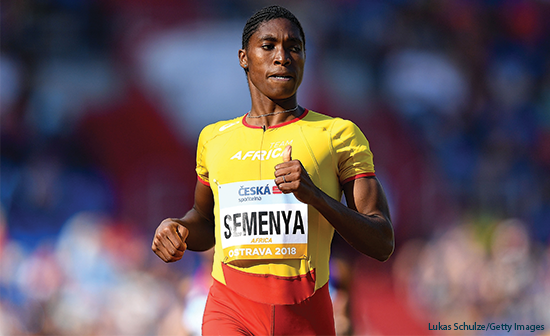
New York (May 1, 2019) — Today, the Court of Arbitration for Sport (CAS) upheld the 2018 IAAF regulation that requires  some female runners with naturally high testosterone—including Olympic and World Champion Caster Semenya—to only be eligible to compete against other women if they agree to medically alter their bodies. This ruling applies to female athletes racing in track events from 400 meters up to the mile, and will be followed by the International Association of Athletics Federations (IAAF).

“Forcing athletes to undergo medically unnecessary interventions in order to participate in the sport they dedicate their lives to is cruel, and a violation of their human rights,” said Hudson Taylor, Executive Director of Athlete Ally. “This fight is not over. We continue to stand in solidarity with Caster Semenya and all athletes affected by this discriminatory ruling.”

Previously, the IAAF ruled some female runners with naturally high testosterone levels will have to race against men or change events, unless they take medication to suppress their natural hormone levels. CAS found that prior similar IAAF regulations were discriminatory and ruled in 2015 that they could not be justified given the available scientific evidence.The IAAF ruling was met by global outrage by athletes including Semenya, and by an open letter to the IAAF by Athlete Ally and the Women’s Sports Foundation signed by over 60 athletes from around the world including Billie Jean King, Abby Wambach and Megan Rapinoe. We called out the regulation as discriminatory, harmful and based upon flawed data which misrepresents testosterone’s effect on athletic performance and we continue to voice our grave concern that discrimination such as this undermines the spirit of sport, and violates the 4th fundamental principle of the Olympic Charter, to which the IAAF adheres:

“The practice of sport is a human right. Every individual must have the possibility of practising sport, without discrimination of any kind and in the Olympic spirit, which requires mutual understanding with a spirit of friendship, solidarity and fair play.”

“Today’s CAS ruling is deeply disappointing, discriminatory and contradictory to their 2015 ruling,” said Deborah Antoine, CEO of the Women’s Sports Foundation. “We will continue to speak out and demand change to this discriminatory policy.”

This CAS ruling, which allows the IAAF regulation to stand, is a tremendous step backwards for inclusion in sports. However, Athlete Ally and the Women’s Sports Foundation remain committed to fighting for athletes like Caster to be able to compete exactly as they are. We will not rest until all track athletes are able to run without the burden of discrimination.