
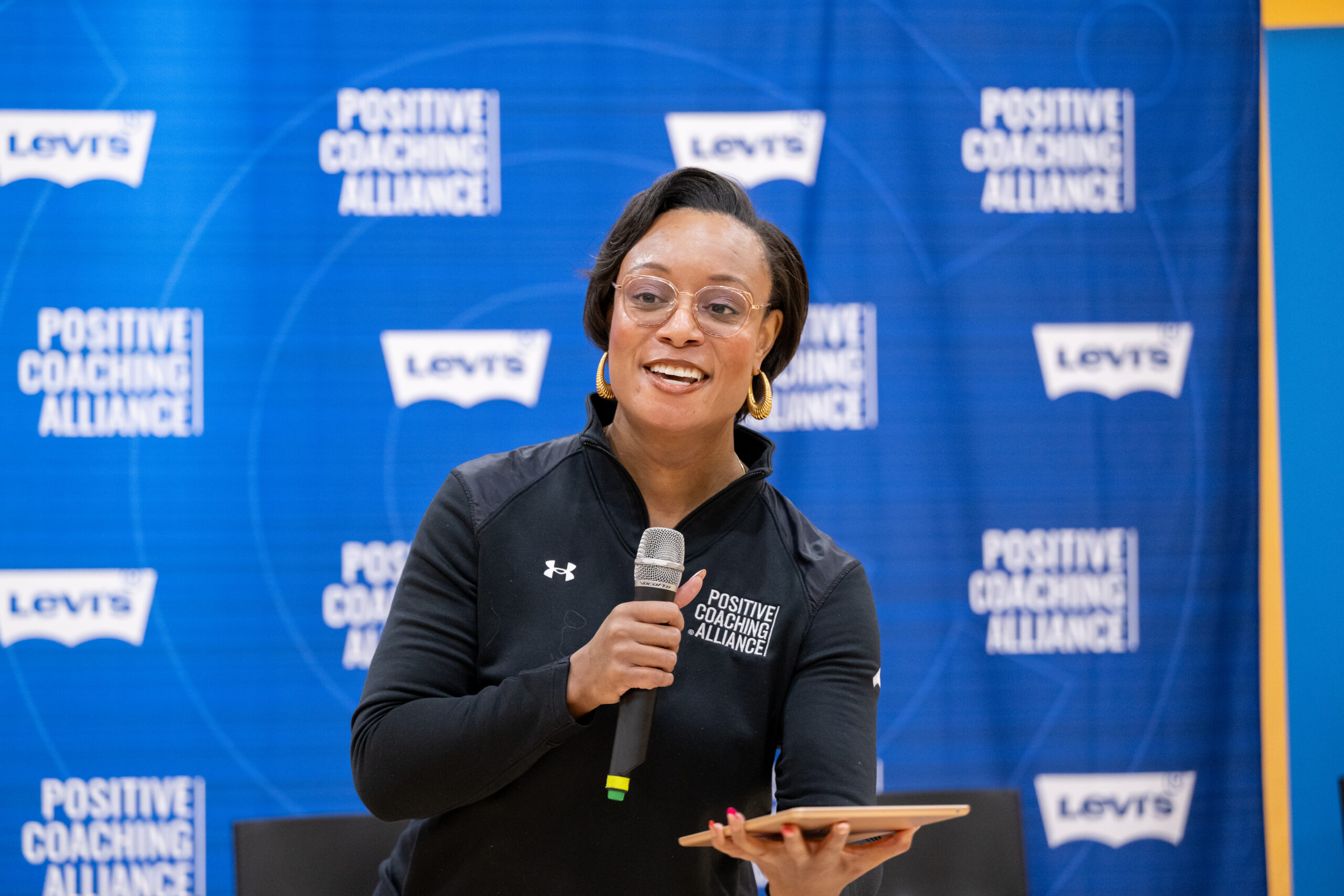
Title IX created a foundation that allowed me to access sports growing up, but that access didn’t always come with equal resources. In track, I trained on the same track as the boys, but events like the 400m hurdles weren’t offered across our district, which directly impacted me as a hurdler. In basketball, our girls’ team never practiced on a regulation court, unlike the boys. Outside school, I often relied on open gym hours, which inherently favored boys and men, and the concept of a “girls’ open gym” was nonexistent. While I had a woman coach in track, I rarely saw Black women in leadership, which shaped what I believed was possible for myself. Now, in my work advocating for sports equity, I see clearly that Title IX was just the beginning. The real work is making sure sport is joyful, culturally responsive, and welcoming to all girls, women, and gender-expansive athletes. That requires systems change, authentic allyship, and co-conspirators who are committed to transforming the culture of sport.
It’s wild to think that National Girls & Women in Sports Day turns 40 this year. I turn 40 in October, so I’m truly a Title IX baby, having grown up right alongside it. That marker is both powerful and sobering. While we’ve come a long way, there are still women like my shero and friend Coach Alicia Berber at Riverside City College who are fighting daily just to play, coach, and feel safe and valued in sport. A day like this matters because it fills our collective tank. It gives us a moment to celebrate progress, amplify victories, and build the community we need to sustain this work. I want girls, especially those from Black and Brown communities, to see themselves so they can dream themselves. This platform shines a light on the leaders and role models doing the work, helping girls in every space—urban, suburban, and rural—envision their place in the sports world.
For me, the future of women’s sports is rooted in one word: belonging. That continues to be the North Star in all of my work. I hope for a world where girls and women, especially those navigating multiple identities, feel seen, affirmed, and free to explore sports in ways that spark joy and confidence. Whether they play competitively or recreationally, they deserve spaces that allow them to fall in love with themselves as athletes. Sports, when done right, can be a place of healing, identity, and growth. But to get there, we must reimagine who leads, who funds, who decides, and who is celebrated. That means centering voices that have been historically marginalized and reshaping the sports landscape, which still skews hypermasculine, heteronormative, cisgender, and white, into one that reflects the full, expansive beauty of our communities.